 Dorelink
Dorelink
Dorelink
High-Density, Low-Latency Optical Transceiver Modules Engineered for Enterprise SANs, Cloud Data Centers, and Next-Generation Carrier Networks.
Explore our standard and long-reach single-mode/multi-mode transceivers, fully compatible with global switching architectures.
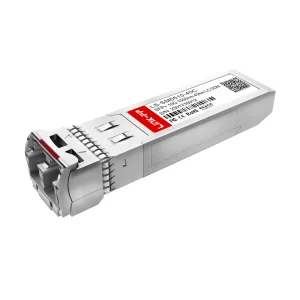
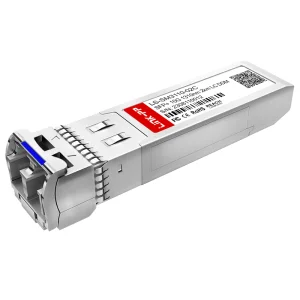
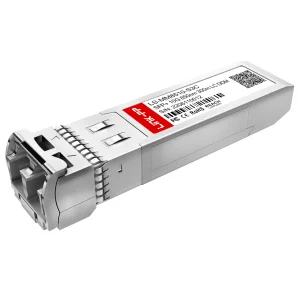
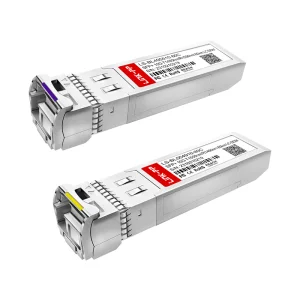
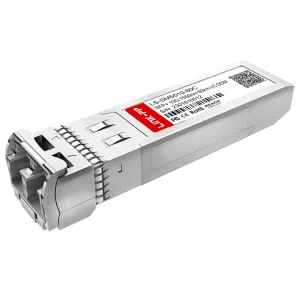
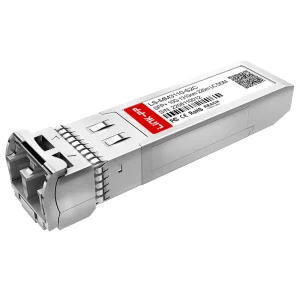
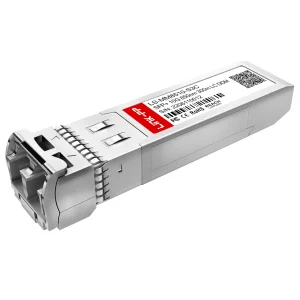
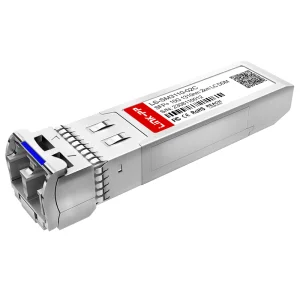
The global demand for high-capacity, dependable transmission architectures remains at an all-time high. While ultra-fast speeds like 400G and 800G dominate headlines in AI-focused hyperscale data centers, 10G SFP+ and 16G SFP+ optical transceivers remain the workhorses of global enterprise networks, edge computing nodes, and Storage Area Networks (SAN).
These form factors strike a balance between bandwidth capability, thermal dissipation, and cost-efficiency. In industrial deployments, telecommunications backhauls, and municipal enterprise networks, upgrading legacy infrastructures to 10G/16G SFP+ provides immediate throughput scaling without requiring costly structural overhauls of the existing fiber cabling system.

Our infrastructure capacity supports scalable global OEM/ODM deployment requirements.
Scale, vertical integration, and advanced automation drive unmatched cost-to-performance metrics.
By sourcing raw optical chips, TOSA (Transmitter Optical Sub-Assembly), ROSA (Receiver Optical Sub-Assembly), and PCB components in close regional proximity, Chinese factories eliminate logistical lead times, reducing overall bill-of-materials (BOM) costs.
Replacing manual fiber coupling with high-precision robotic assembly platforms ensures consistent alignment, lowering insertion loss and improving yield rates for single-mode Bidirectional (BiDi) and 10GBASE-ZR 80km modules.
We write and optimize vendor-specific firmware (such as Cisco, Huawei, Juniper, Arista, and HP) directly in-factory. This guarantees error-free handshakes, avoids switch port lockout, and provides accurate DOM data reporting.
Optimized optical architectures for data centers, telecommunications, and industrial deployments.
High-density ToR (Top of Rack) and EoR (End of Row) deployments utilize 10GBASE-SR MMF transceivers over OM3/OM4 cabling for short-range low-power consumption (under 1W per port), reducing energy expenses and cooling requirements.
SFP+ 10G Single-mode 40km (ER) and 80km (ZR) transceivers enable high-bandwidth inter-office connectivity without the need for expensive inline optical amplifiers, securing reliable backhaul routing for distributed networks.
Hardened, wide-temperature-range SFP+ modules are deployed in smart grids, railway transportation control, and smart factory settings, resisting electromagnetic interference and operating consistently from -40°C to 85°C.
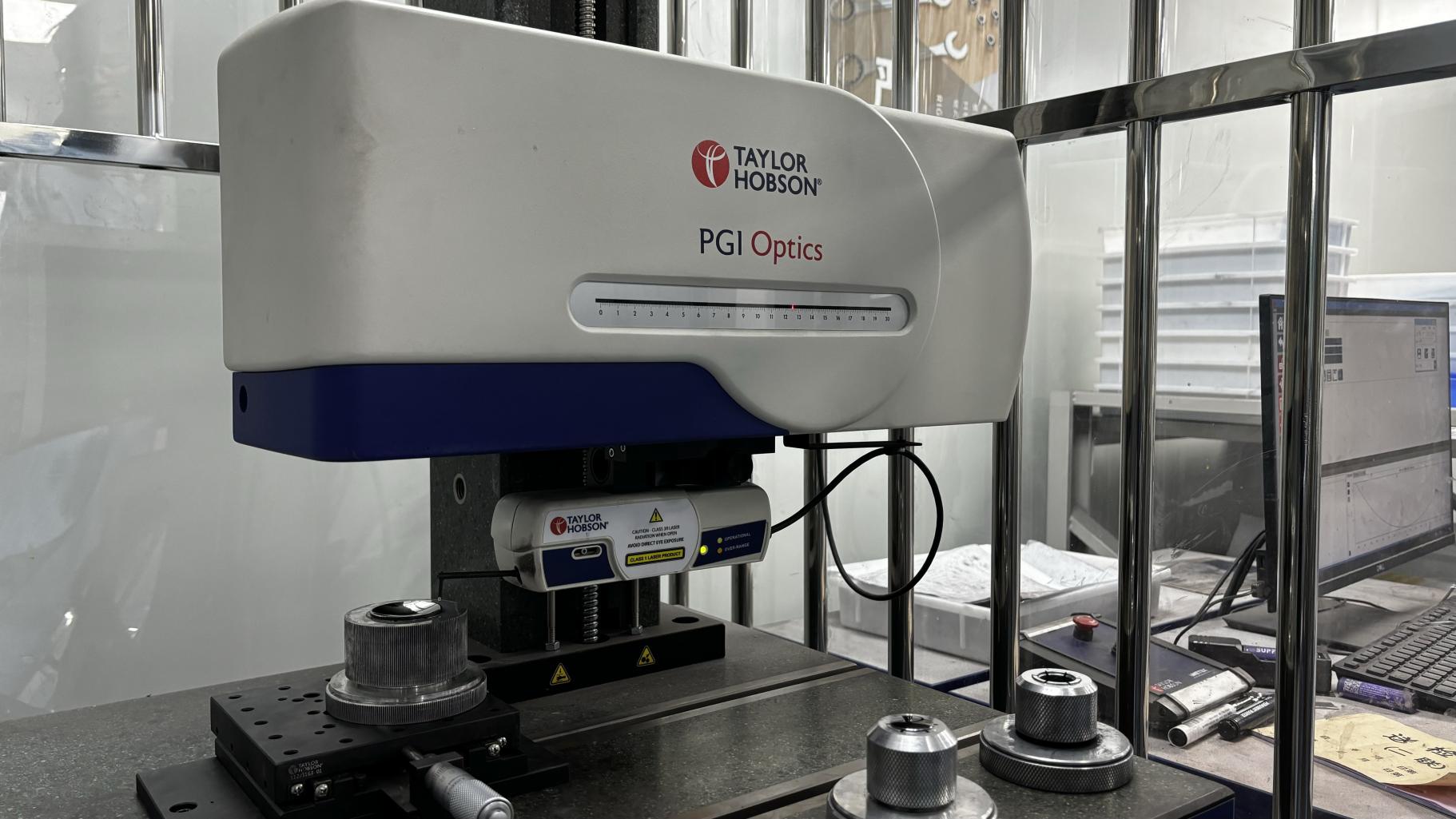
At Dorelink, our 45 professional quality control personnel enforce a strict validation regimen. Every optical module undergoes exhaustive testing before shipment to guarantee absolute compliance with international standards, minimizing field return rates (RMA) to less than 0.05%.
A comprehensive overview of typical parameters across various optical transceiver classes.
| Transceiver Class | Wavelength | Fiber Type | Max Distance | Optical Interface | Typical Applications |
|---|---|---|---|---|---|
| 10GBASE-SR | 850nm | MMF (OM3/OM4) | 300m | Duplex LC | Data Center ToR, SAN Access |
| 10GBASE-LR | 1310nm | SMF (OS2) | 10km | Duplex LC | Campus Backbone, Enterprise Aggregation |
| 10GBASE-LRM | 1310nm | SMF / MMF | 220m - 2km | Duplex LC | Legacy Multimode Upgrades (OM1/OM2) |
| 10GBASE-ER | 1550nm | SMF (OS2) | 40km | Duplex LC | MAN Backhauls, Long-Distance Aggregation |
| 10GBASE-ZR | 1550nm | SMF (OS2) | 80km / 120km | Duplex LC | Core Network Backhaul, Regional Links |
| 10G BiDi (WDM) | 1270nm / 1330nm | SMF (OS2) | 10km - 80km | Simplex LC | Fiber-Constrained Deployments, FTTH |
| 16G Fibre Channel | 850nm / 1310nm | MMF / SMF | 100m - 10km | Duplex LC | High-Speed Storage Area Networks (SAN) |
For system integrators, telecom operators, and IT procurement heads, sourcing third-party optical modules requires looking beyond unit pricing. Real-world durability, standards compliance, and vendor support are critical to preventing costly downtime.
MSA Compliance: Optical modules must adhere to the Multi-Source Agreement (MSA), which defines mechanical dimensions, electrical interfaces, and signaling specifications. Ensuring strict MSA compliance guarantees compatibility across different hardware brands.
Digital Diagnostics Monitoring (DDM/DOM): Insist on transceivers with active DDM/DOM support. This telemetry allows network administrators to monitor real-time metrics, including optical output power, receiver input power, operating temperature, laser bias current, and transceiver supply voltage, facilitating predictive maintenance.
Supply Chain Redundancy: Align with manufacturing partners like Dorelink, who maintain inventory reserves and have long-term agreements with core chip suppliers. This mitigates geopolitical risks and supply chain interruptions.

How technical advancements are changing the landscape of high-speed transmission.
Modern transceiver designs focus on reducing power consumption below 0.8W per port. Lower power draw minimizes heat output, significantly cutting cooling costs for hyperscale data centers.
As networks evolve towards higher bandwidths, co-packaging optical engines with the switch ASIC reduces signal degradation, paving the way for ultra-low latency routing.
DWDM tunable SFP+ modules allow operators to adjust the optical wavelength on-site, simplifying spare parts inventory and optimizing bandwidth allocation.
Addressing core engineering questions regarding optical transceivers, compatibility, and real-world performance.
DDM (Digital Diagnostics Monitoring) and DOM (Digital Optical Monitoring) refer to the same technology under the SFF-8472 industry standard. This feature allows users to monitor operational parameters of the optical module in real-time. Key metrics monitored include:
This telemetry is critical for troubleshooting fiber link degradation and predicting component failures before they result in packet loss or network downtime.
The 10GBASE-LRM (Long Reach Multimode) standard (IEEE 802.3aq) was designed to support legacy multimode fiber installations (OM1/OM2) over distances up to 220 meters using 1310nm wavelengths. However, because of its optical design, it can also run over Single Mode Fiber (SMF) using specialized mode-conditioning patch cables. LRM transceivers utilize electronic dispersion compensation (EDC) at the receiver end to mitigate modal dispersion, which is common in older optical fibers.
BiDi SFP+ transceivers allow for bidirectional data transmission over a single strand of fiber (simplex LC port). They use two distinct wavelengths, such as 1270nm for transmitting (Tx) and 1330nm for receiving (Rx) (and vice-versa for the paired receiver). The primary advantages include:
Yes, in many cases, provided the transceiver is dual-rated or multi-rate compatible (supporting both 10G Ethernet and 16G Fibre Channel protocols) and the host switch port's firmware supports it. 16G SFP+ transceivers are designed to comply with Fibre Channel FC-PI-5 standards, but they can often auto-negotiate down to 8G/4G FC or adapt to 10G Ethernet rates if the internal EEPROM microcode is programmed to support both rates.
Optical transceivers are highly sensitive to operating temperatures. Standard commercial-grade modules operate from 0°C to 70°C, while industrial-grade modules operate from -40°C to 85°C. High temperatures cause:
Dorelink operates a specialized compatibility testing laboratory containing more than 50 of the latest switch and router chassis from vendors like Cisco, Arista, Juniper, HP, and Huawei. When we manufacture compatible SFP+ modules, our engineers read and replicate the EEPROM signature coding, checksum keys, and vendor-specific identification registers. This ensures that when the transceiver is plugged in, the host operating system recognizes it as a native, fully supported module, preventing port-lockout warnings.
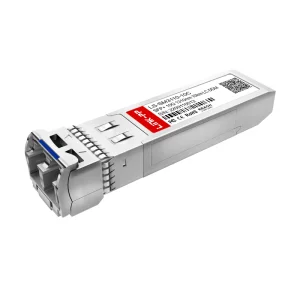
Explore our long-range and vendor-compatible SFP+ transceiver modules designed for seamless integration.
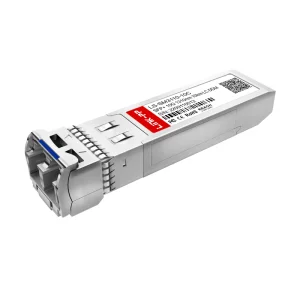
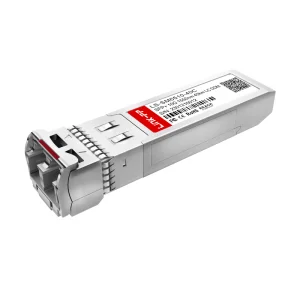
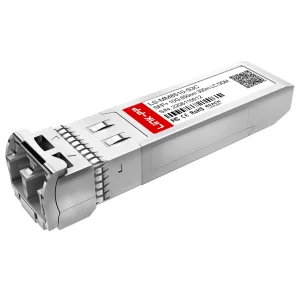
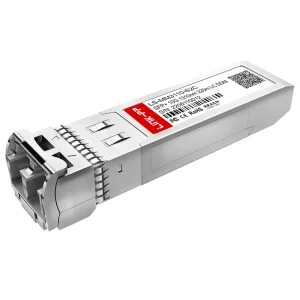
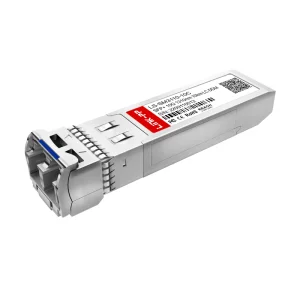
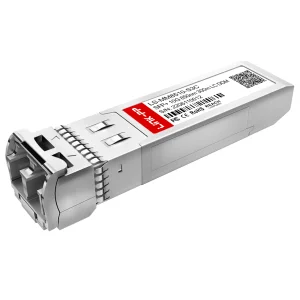
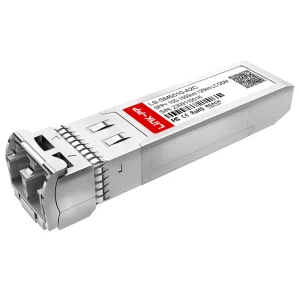
A tour of our manufacturing floor, testing laboratories, clean rooms, and production lines.
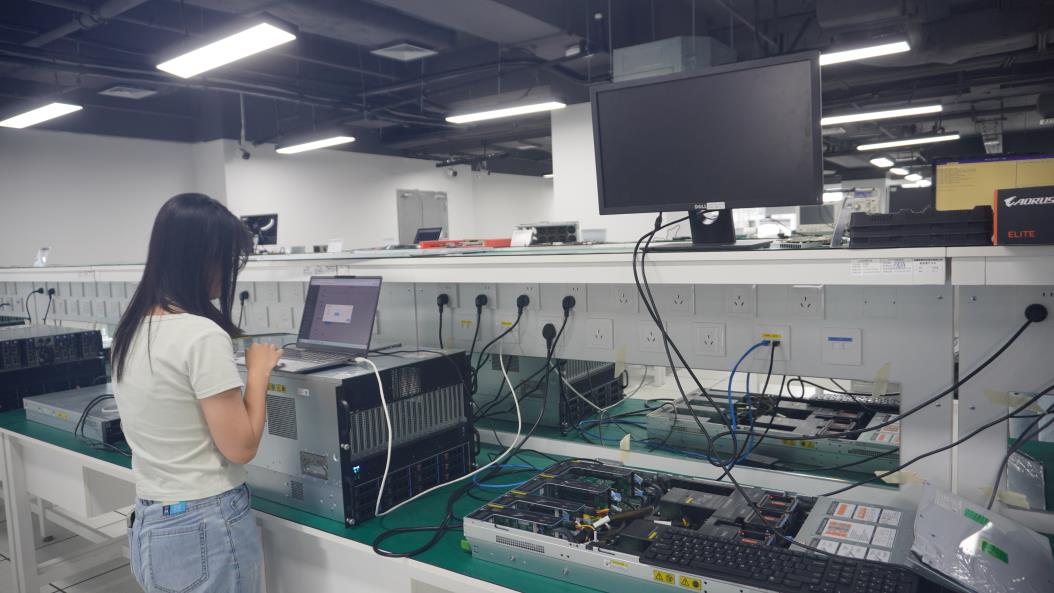

Established in 2016, Dorelink Optical Communications Co., Ltd. specializes in the research, development, manufacturing, and global supply of high-performance optical transceiver products. With a strong focus on optical communication technologies, Dorelink provides reliable fiber optic solutions for data centers, telecommunications networks, enterprise connectivity, and industrial applications.
The company operates a modern manufacturing facility with a total building area of 18,500㎡, equipped with advanced production lines, automated testing equipment, and professional optical module assembly facilities. Dorelink has achieved an annual export revenue of approximately USD 18 million, supported by 7 years of international market experience and 12 years of industry engineering experience.